Monday, November 4, 2013

                   History of New Zealand
N ew Zealand's colourful history commences from the time when the Rangitata Land mass separates from the ancient super continent of Gondwana 80 million years ago, evolving over time to become modern New Zealand.
As Polynesians discover and settle New Zealand, thought to be sometime between 950 and 1130 AD, the Moriori people are settling, possibly around the same time, the Chatham Islands, or Rekohu, a small group of islands off the coast of New Zealand.
In 1642 the first of the European explorers, Abel Janszoon Tasman from Holland, sails into New Zealand waters. The first encounter between Māori and European is violent, leading to bloodshed. After partly charting the coastline, Tasman leaves New Zealand without ever having had the occasion to set foot ashore.

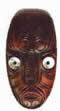
Maori
One hundred years pass by before the next Europeans arrive. In 1769 James Cook, British explorer, and Jean François Marie de Surville, commander of a French trading ship, both arrive by coincidence in New Zealand waters at the same time. Neither ship ever sights the other.
From the late 1790's on, whalers, traders and missionaries arrive, establishing settlements mainly along the far northern coast of New Zealand.
Wars and conflicts between Māori (indigenous people of New Zealand) tribes were always constant, and weapons used until now were spears or clubs. The arrival of traders leads to a flourishing musket trade with local Māori, who rapidly foresee the advantages of overcoming enemy tribes with this deadly new weapon. The devastating period known as the inter tribal Musket Wars commences.
Rumours of French plans for the colonisation of the South Island help hasten British action to annexe, and then colonise New Zealand. A number of Māori chiefs sign a Treaty with the British on 6th February 1840, to be known as the Treaty of Waitangi. The subsequent influx of European settlers leads to the turbulent period of theNew Zealand Wars, also known as the Land Wars, which last for over twenty years.
Hostilities between Māori and European commence in 1845. By 1870 the British government withdraws the last of its Imperial Troops from New Zealand, not wishing to invest any further in a costly overseas war which was likely to continue indefinitely.
The Māori, although inferior in number, proves a formidable foe.
The battle of Gate Pa is possibly the battle which made the greatest impact in the history of The New Zealand Wars.

Hongi Hika, warrior chief of the Nga Puhi tribe; Te Rauparaha, also known as "The Napoleon of the South - warrior chief of the Ngati Toa tribe; Te Kooti, resistant, prophet, and founder of the Ringatu church; Michael Joseph Savage, early innovative Prime Minister are but a few, Māori and European, who have left their mark on the history of New Zealand.
New Zealand today is an independent nation within the British Commonwealth. The British Monarch, although constitutional head of state, plays no active role in the administration of New Zealand's government.
The capital city is Wellington, although the beautiful city of Auckland is the largest on the North Island.......More here
                   History of Australia
 

Australia
 officially theCommonwealth of Australia, is a country comprising the mainland of the Australian continent, the island ofTasmania, and numerous smaller islands. It is the world'ssixth-largest country by total area. Neighbouring countries include IndonesiaEast Timor and Papua New Guinea to the north; the Solomon IslandsVanuatu and New Caledonia to the north-east; and New Zealand to the south-east.
For at least 40,000 yearsbefore the first British settlement in the late 18th century, Australia was inhabited by indigenous Australians who spoke languages grouped into roughly 250 language groups. After the discovery of the continent by Dutchexplorers in 1606, Australia's eastern half was claimed byGreat Britain in 1770 and settled through penal transportation to the colony of New South Wales from 26 January 1788. The population grew steadily in subsequent decades; the continent was explored and an additional five self-governing Crown Colonies were established.
    Australia’s Aboriginal people were thought to have arrived here by boat from South East Asia during the last Ice Age, at least 50,000 years ago. At the time of European  discovery and settlement, up to one million Aboriginal people lived across the continent as hunters and gatherers. They were scattered in 300 clans and spoke 250 languages and 700 dialects. Each clan had a spiritual connection with a specific piece of land. However, they also travelled widely to trade, find water and seasonal produce and for ritual and totemic gatherings. 
   Human habitation of the Australian continent is estimated to have begun between 42,000 and 48,000 years ago, possibly with the migration of people by land bridges and short sea-crossings from what is now South-East Asia. These first inhabitants may have been ancestors of modern Indigenous Australians.At the time of European settlement in the late 18th century, most Indigenous Australians werehunter-gatherers, with a complex oral cultureand spiritual values based on reverence for the land and a belief in the Dreamtime. The Torres Strait Islanders, ethnically Melanesian, were originally horticulturalists and hunter-gatherers. The northern coasts and waters of Australia were visited sporadically by fishermen from Maritime Southeast Asia.
The first recorded European sighting of the Australian mainland, and the first recorded European landfall on the Australian continent, are attributed to the Dutch navigator Willem Janszoon. He sighted the coast of Cape York Peninsula in early 1606, and made landfall on 26 February at the Pennefather River near the modern town of Weipa on Cape York. The Dutch charted the whole of the western and northern coastlines and named the island continent "New Holland" during the 17th century, but made no attempt at settlement. William Dampier, an English explorer and privateer, landed on the north-west coast of New Holland in 1688 and again in 1699 on a return trip.In 1770, James Cook sailed along and mapped the east coast, which he named New South Wales and claimed for Great Britain. With the loss of its American colonies in 1780, the British Government sent a fleet of ships, the "First Fleet", under the command of Captain Arthur Phillip, to establish a new penal colony in New South Wales. A camp was set up and the flag raised at Sydney CovePort Jackson, on 26 January 1788, a date which became Australia's national day,Australia Day although the British Crown Colony of New South Wales was not formally promulgated until 7 February 1788. The first settlement led to the foundation of Sydney, the establishment of farming, industry and commerce; and the exploration and settlement of other regions.
A British settlement was established in Van Diemen's Land, now known as Tasmania, in 1803 and it became a separate colony in 1825. The United Kingdom formally claimed the western part of Western Australia  in 1828.Separate colonies were carved from parts of New South Wales: South Australia in 1836, Victoria in 1851, and Queensland in 1859. The Northern Territory was founded in 1911 when it was excised from South AustraliaSouth Australia was founded as a "free province"—it was never a penal colony. Victoria and Western Australia were also founded "free", but later accepted transported convicts. A campaign by the settlers of New South Wales led to the end of convict transportation to that colony; the last convict ship arrived in 1848.

Breathe ''Every time when we lost the person that we needed more than anyone we lost the part of us that hoped for life....